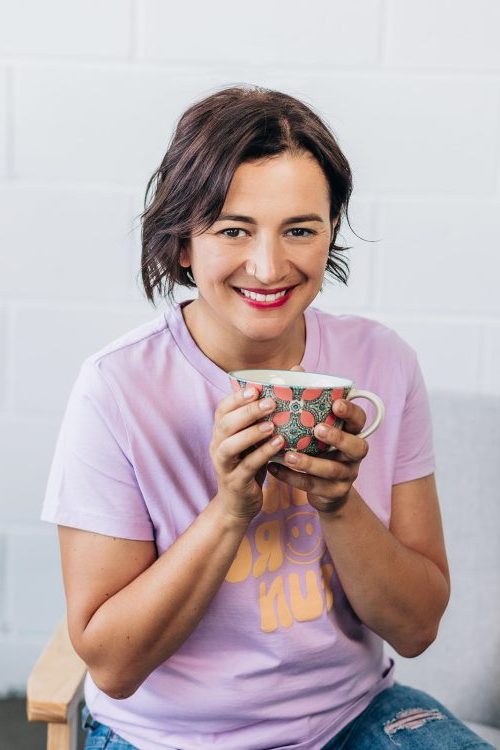
How our mindset impacts how we eat
In this episode of “This Complex Life,” I speak with Dr Lucy, We delve into the profound relationship between our mindset, eating habits, and overall well-being. Dr. Lucy, a dedicated medical practitioner and co-founder of Real Life Medicine, sheds light on the importance of understanding the psychology behind our eating patterns and moving beyond diet-centric approaches to foster a life filled with joy, energy, and health.
Whether you’re struggling with diet culture, seeking sustainable health solutions, or curious about the psychological aspects of eating, this conversation might be just what you need
Themes:
- The Psychology of Eating: Exploring the impact of mindset on our eating habits and how societal pressures and diet culture contribute to our food choices.
- Beyond Dieting: A discussion on why focusing solely on weight loss is not the answer and how Real Life Medicine approaches health and well-being.
- Empowerment Through Knowledge: Understanding the role of processed foods, stress, and emotional well-being in our health journey.
Key Takeaways:
- Mindset Matters: Our psychological state plays a significant role in our eating habits, influencing both our food choices and our relationship with food.
- The Fallacy of Diet Culture: Dr. Lucy highlights the limitations of dieting and the importance of focusing on overall health rather than just weight loss.
- Navigating Stress and Emotions: The conversation uncovers practical strategies for managing stress and emotional triggers that affect our eating patterns.
Featured Quotes:
- “When you understand why you eat, that’s the biggest piece of the puzzle.” – Dr. Lucy
- “Processed food steals the joy of real food.” – Dr. Lucy
- “Eating is not a team sport; it’s an individual pursuit.” – Dr. Lucy
“When you understand why you eat, that’s the biggest piece of the puzzle”
About your guest Dr Lucy Burns
Connect with Dr Lucy
The 12 week Mind Body Rebalancejoin the wait list
https://www.rlmedicine.com/12WMBR
Free Ebook Weight Loss is all about Hormones
https://www.rlmedicine.com/weightloss-ebook
Facebook https://www.facebook.com/reallifemedicine
Instagram https://www.instagram.com/real_life_medicine/
@real_life_medicine
Read the Full Transcript
[00:00:00] Hello and welcome to This Complex Live. Today I have a very special guest, um, Dr. Lucy. Welcome to the show, Lucy. Oh, thanks so much for having me, Marie. It’s an absolute honor to be invited on. Could you share with listeners a little bit about yourself, who you are, what you do? Absolutely. So, uh, my title as a doctor possibly gives it a little bit away.
So yeah, I’m a medical practitioner. Um, and it’s interesting. So I used to sort of introduce myself as, oh, you know, I’m a weight management doctor, which never, you know, happened. Fit never sat really well with me. It was like something I sort of felt like, Oh, yay. Um, so I now describe, I guess what, what we do.
And so I run a, a business and we help women who have basically tried every diet under the sun, uh, always looking for weight loss. But for us, it’s about helping them optimize their health and manage their mindset [00:01:00] so that they can live, you know, lives full of joy and energy and free of chronic disease and live a life where they’re not sitting on the sidelines because of health related issues.
So, You know, for us, that’s, that’s really what we embody. And, you know, yeah, sometimes some weight loss is required for that to happen, but that’s not the only, like, that’s not the focus. Yeah. So by we, you mean you and Dr. Mary? Yes. Yes. So I have a gorgeous business partner called Dr. Mary, who is like the ying to my yang.
And um, but yeah, the two of us run a business called Real Life Medicine. And for us, our name. Our name actually just says it all. Like, honestly, that is the things that we try and embody are things that are helpful in real life because on, you know, we’re not all, you know, athletes with teams of cooks or chefs or trainers or, you know, supermodels [00:02:00] with, you know, everything scheduled out for them.
And they just have to step out of a room where both of us are real life people with other, you know, jobs, kids, partners. Parents, all the needs that, that standard real life people have. Yeah. And that’s sort of the focus of what we want to talk about today is the life stuff. So if someone’s listening, hoping to get like your top five diet tips or what to eat or what not to eat, we’re not really going there.
Um, but starting off, how do you describe the relationship between our mindset and eating habits? And I know from listening to your podcast and even doing one of the courses myself, you spend a lot of time focusing on our. The psychology of eating. Yeah, absolutely. Because, and I’m sure all your listeners will know, the thing is that, You know, dieting has set us up to follow a rule or a plan or [00:03:00] count points or come up with some formula.
And most of us can do that when everything is fine, when it’s life is going along really well. But then what happens when life throws a curve ball or we go on holidays or we’re out of our routine, we’ve been actually disempowered by the dieting industry because we don’t know what to do. So it’s like, and I reckon one of the most common questions we get asked is, is this allowed, or can I eat this?
Or it’s like this permission. And it’s because we have, we don’t know what to do anymore. And it’s, it’s, it’s fascinating. Um, and I get it because I did exactly the same as the diet queen. I counted points, I watched portions, I added up serving sizes of things and weighing and measuring. So of course. I had no idea about actually what my intuition or what my body needed.
I had no idea how to work that out. So [00:04:00] one of our things is looking at, you know, not just what, what we eat, but why we eat. And when you can understand why you eat, then that’s like the, that’s the biggest piece of the puzzle. Hmm. There’s an old saying, I don’t know if it’s old and I don’t know who said it, but anyway, that it’s not so much, you know, when you’re looking at health outcomes and there was a really big study that came out that tracked the health outcomes over multiple decades.
And it’s the quality of our relationships that really impacted the quality of life. So there’s also this thing of, it’s not some, it’s not always just what you eat. It’s who you eat with as well. Yeah. Yeah. Yeah. How do you make, how do you make sense of that with what you’ve just described? Like if you’re counting calories, you’re following rules, you’re doing all this stuff.
How do we include connection in that? Yeah. So, and, and it’s interesting, um, because food is a very integral part of people’s lives. I mean, we do it several [00:05:00] times a day, uh, and we use often do it with people. And I guess there’s a couple of ways that we. Look at things. And this is the nuance. I think that needs to be spoken more about is navigating, you know, extremes.
So there are processed food companies in particular that are hijacking the food is love message. And food is connection. And when you think about the ads on telly, you know, their KFC ads are all, you know, give mum the day off. And they were all sitting around having a beautiful barbecue with lovely, you know, place settings.
And someone brings along the bucket of KFC and everyone’s hurrah. And it’s like, that’s That is so different to, to, you know, preparing a, you know, and again, I’m not a cook. I don’t cook a lot. I don’t like cooking. I eat beautiful real food, but I’m not one of those people that really gets their thrills out of cooking.
But, but I’m [00:06:00] very happy to bang a slow cooked something or other in the slow cooker and pull it out. And it’s delicious still. So. Yeah. Working out the messaging and who’s driving that messaging is really important because, you know, Newsflash processed food companies do not care about your health. They do not care about anything other than their profits.
And so they will use whatever sneaky marketing tactics that play on our heartstrings to get you to buy their product. And my Biggest bugbear is our society has this disconnect with that concept and then blames the individual for, for being overweight or developing obesity or chronic related, chronic obesity related diseases and says, well, you know, they just should eat better.
And it’s like, Oh, it’s so much more [00:07:00] complicated than that. And so when I’m calling out. Processed food companies. It’s never about the individual because the individual is actually the victim. The company’s driving this message. They’re the perpetrators and they take no responsibility for it at all. Yeah.
That’s a really powerful message. Yeah. So again, we can reclaim our power though, because nobody wants to be a victim. You don’t need to be a victim, but well, so whenever people go, Oh, you know, Lucy, you’re so strict. I’m not like, honestly, I’m not, I’m not, I’m not perfect. I’m not, you know, plucking my own spinach from the garden every day or anything like that.
Um. But what I am now is really mindful of the choices that I’m making for me and not so much for my family now because they’re, my kids are adult, young adults, but certainly growing up. And there’s stuff that I now know that I wish I’d known when they were little. I didn’t know. And so, you know, [00:08:00] I used to do all the things that people, busy mums do, you know, I’d buy takeaway pizzas from Aldi that had goat cheese and beetroot and think, Oh, they’re good.
Not having any idea about the processing that’s involved and the reason that processed food hijacks everything, all of our, our intuition around what we need as humans to eat. Yeah. So if we look at, you mentioned sort of understanding about yourself and the things you wish you knew. How do we relate that to our mental state?
So how does how we feel or our, you know, our wellbeing impact? What we eat or our nutrition. Yeah. So it’s a two way street. So our brain and our body, uh, obviously connected, like we know that, you know, you know, that on one level, but interestingly medicine in particular separates them out, you know, this mental and psychological health over here and physical health over here, but they’re the same thing.
So there’s a, [00:09:00] it’s a two way street. So what we eat. Can impact our mood and our mood impacts what we eat. So there’s no doubt that when you’re, you know, stressed, um, tired, emotional, whatever that means, whether that’s angry, lonely, sad, guilty, resentful, ashamed, any of those things, we can use food or food products.
I know I like to call them to as an attempt to make ourselves feel better. And, and again, that’s that it’s a tool. And it’s, it works. I mean, if it, it does, if it didn’t work, we wouldn’t do it. So people, when they feel sad, we’ll eat chocolate and it does make you feel better short term. And it’s designed to do that.
And we’re then encouraged again through repetitive commercialization of a a thing that we did [00:10:00] initially, potentially innocently, but that message is just reinforced over and over again. So one of the things that we love teaching, I guess, is the idea that human emotions, and I mean, you know, this. More than anyone, Maria, complex, um, we often have to feel them.
We don’t want to feel them. We don’t like feeling them. So we all push them away, shovel them down in whatever way we can. And in particular, processed food. And if you’re an adult, alcohol, you know, they’re really cheap and effective ways to do that. But they come at a cost long term, they don’t come, you know, short term again, nobody, nobody develops alcohol related diseases, you know, having had one glass of wine after work on a stressful day.
But if you do that every day, and that amount increases up to 20 years, you do. Yeah. So stress is a [00:11:00] big one. And I think some of those feelings you mentioned are usually Uh, around stressful, either events or situations or not getting your own way. Like they’re all sort of effects of experiences and stress is common.
Um, people are busy, they’re time poor. How does when we’re stressed, how stress impacts our eating habits? Like, what do you notice on your side of things with the people that you consult with or through your groups? Yeah, absolutely. So, you know, we have, um, I have something called the, you know, the wheel of change, which is, again, it’s not my theory.
It’s just a, uh, an explanation on a, on well known behavioral change theories. Uh, and people will refer to themselves as falling off the wagon. I’m sure everyone knows that idea that you’ve been doing something. You know, that’s perhaps healthful and maybe it’s changing your eating or maybe it’s going for a walk or it’s doing something.
And when you stop it, it’s referred to as falling off the wagon. So the [00:12:00] things that are most likely to cause that to happen are, you know, stress and distress. And we often look at, I mean, stress technically is a physiological response in the body that is normal to an external stressor. So people fear stress, but it’s, it’s normal.
Like if we had no stress response ever, then we would be dead. So that’s not helpful. So we do need, like everything, like lots of things, it is a Goldilocks effect. You don’t want too much and you don’t want too little. You want just the right amount. But the key is, well, there’s a couple of keys. One I think is that in our modern society, and particularly in And this is generalization, but it is often the mother, the woman, who is like the linchpin of the family.
She’s the one who’s potentially working, also takes on the cognitive load of shopping, of organizing, you know, kids [00:13:00] dental appointments, who’s doing what after school activity. So she takes on a lot. Um, she has a caring role. It’s very nurturing. She’s looking after the kids, potentially the partner, the parents, the dog.
A lot. There’s all this stuff constantly on her mind and rarely does she take time to stop and rest. And when she does, she feels guilty and lazy. But the thing is, we know in the stress response that that’s, that’s actually the, that’s what it’s meant to do. You’re meant to have a response and then it’s meant to end and you rest, which is exactly what happens when you think about nature.
And interestingly, it’s the female lions that do the hunting. So they’re off, they’re hunting, they’ve got a big stress responses. They’re running, running, running, running. They grab the thing and then they lie down for half a day and rest. So we don’t do that. So that means we’re constantly got this, you know, cortisol load going, which is unhelpful [00:14:00] for our health long term.
It’s inflammatory. It increases our, um, increases the imbalance in our metabolic hormones, uh, which is, you know, one of the drivers of chronic disease. And in particular, obesity is insulin resistance driven a lot by, by chronic stress. So, You know, so there’s that as one aspect and then because we become in this sort of crazy busy life, we were actually not particularly efficient in the way we do things.
Uh, we, you know, we’re tired, we’re looking for relief from this feeling and, you know, a couple of places to get that relief, uh, you know, food. Quickly shuffling in a chocolate bar or, or, you know, in recent years, phone scrolling. And, um, you know, you’ve got all these things to do, but you just need a little time out.
So, you know, play 10, 000 games of Candy Crush. [00:15:00] I like what you were saying about the The stress cycle, because that’s something I talk to clients about is we need to complete the cycle and, and we don’t, people don’t know that. And sometimes I’ll draw a very simple, the thing is the York Dodson law, like a little bell curve on a whiteboard and show people that we need some stress to get to peak performance and then too much stress.
We start to lose our capacity to engage in those tasks meaningfully. And if you sit at that end of that pointy end of the bell curve for long enough is when you develop those chronic health conditions, regardless of the quality of your diet. So you can be doing, um, having an amazing diet, but it’s stress that’ll kill you.
Yeah, totally. Absolutely. And again, it’s, you know, it feels hard sometimes like, Oh my God, I’ve got to do all these things. I’ve got to sleep well. I’ve got to manage my stress. I’ve got to do some movement. I’ve got to eat properly. Like it feels like a full time job. However, when you create that bit of space by completing the stress cycle, which is often literally the rest, yeah.[00:16:00]
You become much more efficient. You then have time and you know, we always say to people, you don’t, you don’t have to do everything in the first day, but you suddenly decide, and this particularly, you know, this time of year, we’re recording this in new year and that’s what people do. They write this great big list of all the things they’re going to do because they want to feel better.
And, and then try and do them all at once. And then, you know, again, something, life gets busy and they, they stop doing, they stop them. And, and that, that then is the, Oh, I’ve fallen off the wagon. Yeah. So I’ll, I’ll ask you in a moment about mindful eating, but when we’re looking at stressful periods, are there any specific sort of nutritional considerations?
So if someone knows I’ve got a particularly stressful time coming up or deadlines at work, or maybe it’s term three and all the kids have got grand finals and there’s just a patch of time that’s going to be difficult. Yeah. Are there any things that they should, um, consider consuming less of or more of or things to help that process along?
Yeah. [00:17:00] So a couple of things, I mean, often, often when we’re stressed, we do the things that are the least helpful to us. So that can be suddenly, um, you know, drinking a lot more coffee, for example. Now, don’t get me wrong. I love myself a good cup of coffee. I’m very happy to have coffee. I have two coffees a day, but I know if I was stressed, Um, I’m just stressed because I don’t sleep well and I’m tired and I need to power through the day.
It’s tempting to increase that coffee and have, you know, four or five coffees. But the thing is that the coffee increases your, again, it’s, it’s a stimulant. So it increases your adrenaline and your cortisol, which is what it’s already over. in your body. So whilst it’s tempting, it’s not actually that helpful.
The other thing we then do is at the end of the day, we go, I’m going to wind down. I’m so stressed. I’m just going to wind down. I just want to have a glass of wine. And so you have a glass of wine or two, and then that actually impairs your, Bed, your sleep, sorry. [00:18:00] And the other thing we’ll sometimes do is not go to bed, because you know, if you’re a busy person, busy mom, the time at the end of the day, everyone’s in bed, the kids are asleep, the kitchen’s cleaned, you sit down, you think, Oh, thank God, this is my time.
And then you don’t want to go to bed because you know, the minute you go to bed, The next thing that your conscious brain is aware, aware of is that you’re starting the whole, the whole rat race again. And so we try and eke out that, that time to yourself for as long as possible. And we do it by stealing sleep.
And so you then start your day behind the eight ball, you sleep deprived and it all starts again. And you just end up in this cycle. Um, so I always say to people, well, look, the thing that we really need to do in busy, busy times is prioritize our sleep. If we can go to bed early, uh, doesn’t have to be early, but earlier, then, then we set ourselves up the next day.[00:19:00]
And a little kind of hack I have is. Because I used to go, I don’t want to bed. And I’d have this weird conversation about how I don’t want to go to bed. But then once a minute, I don’t want to get out of bed. And what I realized is it’s not the bed, it’s, you know, it’s the things we’re just saying. So now I call bed my rejuvenation palace and I’m going, and I mentioned it’s like a day spa and I’m off to rejuvenate and I’m repairing my cells and I’m replenishing and restoring all the things that I need for my busy day.
And you know, it’s life changing and it’s free. So yeah, so that’s, that’s helpful. It makes me think, as you’re describing that, I can picture if I’ve gone interstate for a conference or something, that’s when I seem to do all of those things. Like I’m out of routine, my gym’s not nearby, I might’ve packed runners, but I’m like, Oh, it feels like the novelty of being somewhere new.
So I might sleep in, then I have a coffee at the hotel. I might get a second coffee at the conference. There’s usually some [00:20:00] delicious treat that I might have as morning tea and then lunch and then afternoon tea. And before I know it, I’ve eaten. A week’s worth of, you know, maybe treats in a day. And then I’m so I’m digesting all the content.
So I might be really tired, but then really energized. So I might have a glass of wine or two. And if you do that for a few days, I can see looking back the impact of those. Absolutely. Absolutely. And there are, you know, lots of us do that. That’s how you live your life and it becomes the new normal and you almost become disconnected from how your body feels.
Because this is, this is the new normal. It’s like, you know, having the hum of an air conditioner in the background, you just block it out. And it’s not until you stop and sort of give your body and your brain that space that you go, Oh my God, I feel so much better. I feel so much better. Better. And that’s, yeah.
So if we move into thinking about mindfulness, and it doesn’t mean you have to be [00:21:00] a, you know, cross legged yogi doing 30 minutes of meditation, but how do we, if someone knows nothing about it, and this just feels really terrifying, how can we explain how to start eating mindfully and noticing your habits?
Yeah, And just the smallest step forward that people can take. Yeah. So I think, um, again, what, what we have become disconnected, you know, our food, where our food comes from, what we’re eating. We’re completely disconnected from it. And our brain, and again, I mean, you know, I love human brain, as I’m sure you do.
And our very clever brains are so clever that they’re, they’re actually looking for shortcuts all the time, which makes sense. I mean, you know, if you’re a person, if you, you know, if you’ve got, you know, If you’re in a jungle and you’ve got two pathways and one’s covered in brambles and pickles and vines and you’ve got to hack your way through it and the other one is a lovely [00:22:00] mossy carpet, well of course you’re going to go the mossy carpet route.
That’s normal, that’s smart. What’s happened in our world is The way we eat and prepare our food, we’re looking for the mossy carpet. So we’re looking for the quickest, the shortest, the easiest way to consume our food. But at the end of the mossy carpet, there’s actually a big hole in the pit of despair.
And one of the things that we get, um, asked a lot is, you know, Oh my God, this is so labor intensive, all this cooking. And Sometimes what I do is I tell a story about, well, you know, imagine it wasn’t that long ago, like a couple of hundred years ago, before we had electricity, people had to go and hunt their own food.
So if they’re a bit hungry, they’d have to go and hunt a, I don’t know, a bison or a deer or something. First of all, you know, spend a few hours tracking it, getting, You know, then hunting it, then getting it, then they’d have to prepare it. So it’d be having to be skinned. [00:23:00] And then because it was this big thing, they’d have to try and, you know, salt some of it for later.
And there was all this stuff that was involved then. Of course, there weren’t any matches. So you had to go and get some, you know, flint and gather some wood and all of this thing to prepare it. So you could then cook it. And all of this took forever. And all we have to do. Is go to the fridge, get a few eggs out, crack them into a pan.
You can make an omelette in about three minutes and you’re done. And that seems so much easier in comparison to all of the other things. So because we’re all looking down the, um, you know, for the mossy road, the easy path and advertising again, gets in there. It’s, it’s convinced us. But not only do we not have time to prepare any food, we don’t even have time to eat it and enter, up and go.
And so people are now believing that they don’t have time to eat, they need [00:24:00] a shake. Or some sort of pre prepared drink as their meal, and that that’s somehow going to help them. And honestly, it just doesn’t. It is so far away from what humans are supposed to consume. And so, particularly if you, if people are thinking about weight loss, they go to, go to a weight loss shake.
And that’s like the opposite of what we should be doing. And instead, if we go to the food and we get rid of as much processed products as possible, and a little line I love is that processed food steals the joy of real food, and you don’t have to wait very long for your body and brain to recalibrate.
But when you get back to real whole food, so that’s food as close in nature as it’s meant to be with minimal processing, your taste buds become alive. And so you can taste the food and you can taste the individual, almost the individual ingredients in it. [00:25:00] And I remember once really savoring a green, Thai green chicken curry.
Which, you know, I used to eat, but because I had a lot of sugar and a lot of processed food, it was just another, this was just another bit of food. And then once I got a bit of all that stuff, there was a time where I’m eating this and I’m going, Oh my God, I can actually taste the lime. I can taste the ginger.
I can taste the lemongrass. And it was like this amazing experience. And I never believed it when people used to talk about that. Like I’m thinking, Oh God, I don’t know what you’re talking about. I think you’re making it up. I think you’re just a foodie and I’m not a foodie. But, uh, when you get rid of the processed food, your taste buds come alive.
So then, you know, as part of mindfulness, it’s really just noticing the, you know, mindfulness is noticing first, noticing, not judging, just noticing, noticing, Ah, isn’t it interesting? Every afternoon I go. [00:26:00] And stand in my cupboard and look, and you think, what am I looking for? What am I needing? What am I wanting?
What does my brain want? Is it actually hungry? Often not. Bored, looking for some entertainment. Just had a difficult phone call so that you can start to. Observe and collate why you eat and recognizing that hunger, physiological hunger, and then psychological drivers to eat are actually completely separate processes, but we often don’t know that.
And we often haven’t been taught that, and we often don’t even realize. So we think we’re hungry when we’re not physiologically hungry. And so then people start, because again of dieting, they start getting scared of hunger and they’re hungry and they don’t know what to do. And they’re actually probably physiologically hungry, which is your body saying, we need some fuel.
We need some nutrition. We need some sustenance. [00:27:00] And we’re so disconnected, we don’t know what to do. You mentioned, I mean, I’m pulling out the feelings that I can see in those situations, but there’s boredom, stress, overwhelm, um, even just looking for fun or novelty, which I guess might be boredom, but so it sounds like maybe the first step you don’t want to even have to change anything just yet is actually starting to notice where you’re at.
When you’re making those choices or even just sort of reflecting on your behavior throughout a day. Like how would someone just start small? Yeah. So most people, if they’ve, I get one of our, you know, to, to bring it back to, to basics, our philosophy at real life medicine is to empower people. So basically they can make choices that they’re happy and comfortable and that they can live a life.
Of no regrets. And I think for a lot of people, food holds [00:28:00] regrets for, for all sorts of reasons. Um, and again, whether it’s dieting, whether, you know, diet language is all about cheating and breaking and, you know, being weak and all of those things. So recognizing, so when, and so when we do that, let’s say we go on a bit of a bender and eat a whole pile of stuff, we feel terrible about ourselves, especially if we made this promise not to do it.
So we feel so terrible that we then don’t want to know about it. Which is sort of. Bury it away. Nobody, you don’t examine it. You don’t, you just pretend it didn’t happen. Whereas I like to say, you know, we use a little acronym, which is SLC, which is to self reflect. So you just look at it and you learn and you do it with compassion.
Because at the end of the day, your brain’s trying to do two things. It’s trying to keep you safe and make you feel better. So keeping us safe is obviously if we’re physiologically starving, well, it’s going to tell you to eat, it’s [00:29:00] normal. Uh, if we were trying to feel better because we’ve had a crap day because, you know, we ran over the cat or our boss came in and yelled at us or whatever.
It’s, these are just tools that our brain is offering. To make you feel better. You haven’t murdered anyone. You haven’t ripped off old ladies. You haven’t done some Ponzi internet scam where you’re stealing, you know, the retirement funds of, of people who have hard work. You haven’t done any of that. All you’ve done is used a tool that at one stage served you well, and perhaps no longer does.
So yeah, I think you can start and you know, you can even just write it down and there’s a little acronym. That’s not my acronym, although we’re, again, we always like to, it’s like recipes, I fiddle a bit. So there’s an acronym that is the HALT acronym. For why people, this is for addiction, why people perhaps drink and we’ve put a P in front of it.
So we use the FALT acronym. So it’s people will eat or drink [00:30:00] because they’ve either got pain because they’re hungry. And by that, I mean, physiologically hungry, they’re angry, they’re lonely, or they’re tired. So the angry can be, um, angry doesn’t have to do with the anger. It can be resentment, like resentment is a big driver to eat because it’s an awful feeling when you’ve said yes to doing something and you wish you weren’t doing it, but you don’t have the confidence or the ability to say no.
So you just see the way. Being, you know, grumpy about it and that, how do we fix that? We eat. Lonely can be physically, physically lonely, but it can also be lonely in that maybe you’re, you feel you’re, um, bearing the burden of responsibility. For example, you don’t feel anyone sharing that with you. So you’re taking it all on.
So it feels lonely doing that. And, and tiredness is two [00:31:00] things, tiredness physiologically, if you’re tired, if you’re not getting enough sleep does affect your metabolic drivers to eat. So it’s normal. It’s the normal physiological response, but also we’re often looking for, um, dopamine driving processed food as a little pick me up to kind of feel better.
Because most people, when they’re tired, aren’t sitting down to a bowl of broccoli to give them some energy. They, they end up drinking or eating some again, usually processed food bar. I was just quickly scribbling that down. Cause that’s such a really good acronym. And I think one of the things I’ve noticed when people try to do diets is they’re just trying to focus on substitution instead of actually thinking it’s just like, Oh, just grab some hummus and carrots.
It’s like, what you’re talking about is. Notice the, the why, get to know, am I lonely? Am I [00:32:00] sad? Am I overwhelmed? Am I tired? Am I hurt? And starting to recognize those drivers. That’s the first step because that behavior change can’t come without awareness. And substitution merely won’t work. No. And that’s, that’s what diets are, are short term substitutions where people go, Oh, good.
I know. And it’s, and you know, they go, good. I know what to do. I’ll just follow this plan. Usually they involve some calorie restriction. And so the allure is that short term, most of them will work. But, you know, I don’t know anyone who’s happy to lose five kilos, only to put seven on. And that’s what diet like, it’s not just me making that up.
That’s, that’s the science that calorie restriction without attention to, you know, your, your physiological drivers, your understanding, your psychology. And look, I mean, the [00:33:00] clearest thing to me is the fact that about 30 percent of our clients have had. gastric sleeve surgery or gastric bypass surgery. So invasive surgical operations in a, in an attempt to improve their, um, metabolic health and prevent chronic disease.
But if you never understand why you’re eating in the first place, again, our clever brain comes up with all sorts of tricks, um, to continue to use food to soothe. And it’s only once you get past that and, and it doesn’t happen overnight, like, it would be great to go. Yeah. Oh, good. I don’t use food to soothe anymore.
I can honestly say that as a person who did, who was a very big emotional eater, who ate a lot of processed food, I don’t do it anymore. And it, I don’t, and it’s not, willpower. I’m not everyday wishing I could have my pack and Maltesers. It’s changing what I [00:34:00] used food for and getting the skills on what to do when I am emotionally distressed.
So you can’t just take away a tool and not replace it with another tool. And this is, you know, where people like you Marie, uh, uh, experts in helping people develop tools to emotionally regulate. Thank you. So if someone, if someone listening, if this resonates with them, um, and I’ll get you in a moment to share some of the work you’re doing and where they can find you.
If someone’s listening and they’re like, okay, so not a big grand new year’s resolution. I don’t need to kind of what’s one thing that they could do if you were to sort of say, okay, here’s one takeaway piece. Here’s a little experiment to try for the day or for the week. What’s What’s something that you might encourage people to think about?
So, um, potentially doing an audit of their, [00:35:00] of the processed food intake. Because processed food, it’s not, and again, it’s not that I think people are eating processed food. Uh, you know, they’re not greedy, they’re not lazy, they’re not weak. It’s, it’s not about, it’s not a moral failing to eat processed food, but what it is, is recognizing that you’ve been sold to.
And it’s, there are people out there who are saying that, oh, you know, the reason processed food is so destructive is because it’s high in sugar and high in fat and high in salt. But it’s actually more than that. It is more than that because it’s the way the food is processed. The, uh, the, the fact that it is designed to be overeaten.
So, you know, it kills me. I see so many people who are trying hard. To improve their health, um, and not realizing that it’s the processing of the food that they’re eating that is actually taking them off [00:36:00] their path. So, which basically means coming back to things like, well, you know, what is unprocessed food?
And so it’s, it’s looking at ingredients. And in fact, you will remember this, do you remember there was a book? crazy popular recipe book called the four ingredients or the five ingredients or something like that. And when I looked now, and I bought it cause you know, yeah, who wouldn’t want to cook with four or five ingredients?
So easy. Except they weren’t ingredients. They were, you know, packets of biscuits that was counted as an ingredient. So an ingredient is the things that are in your fridge, you know, fruit, veggies, um, you know, a protein. And look, our formula is easy. It’s pick a protein. So you have protein is the king of your dish.
So your protein is something like meat, fish, chicken, eggs, dairy. Um, if you’re vegetarian, it can be tofu, tempeh, uh, can be lentils and things like that. If you’re insulin resistant, we haven’t talked a lot about that at this stage, but if you [00:37:00] are, so that’s anyone with diabetes, pre diabetes, fatty liver disease, high blood pressure, if you’re storing all your fat around the middle, you’re likely to be insulin resistant.
For those people, it is most helpful. To have a low carbohydrate version. So it gets a bit tricky then with lentils and, and chickpeas because they’re higher in carbohydrate. So you pick a protein, you add some veggies. Whatever veggies you like, again, preferably above ground veggies. If you’re insulin resistant, we tend to avoid or minimize our use of below ground veggies.
Add some fats, which are things like some avocados, some nuts, some olives, some olive oil, some butter, things that are just not processed. Like there’s one ingredient, there’s one ingredient in butter and that’s butter. Or sometimes there’s two, might add a bit of salt. But there’s not 45 ingredients like margarine.
And then you add some Flavor, which is herbs, spices, um, a bit of salt, again, salt’s not the [00:38:00] enemy. We’ve been demonizing it. It’s not, but you’re not adding things with flavors and thickness and gums and enhances and all of that, because ultimately it’s not going to help you. And so that formula. It’s sort of easy and it, and it’s, you can do it any way you like.
So you can make, you know, curries like that. You can make, you know, basic steak and veggie, which sounds so boring. But when you add a little bit of butter, because remember I grew up in diet lamb with butter was like, you know, anybody who ate butter was committing. Murder, but you had a bit of butter and a little bit of salt to it.
And suddenly green beans taste amazing. So it doesn’t have to be complicated. It’s. But, uh, minimizing the processed food in your diet and your family’s diet if you can is the key to long lasting health. Yeah. I [00:39:00] love that. And maybe I was thinking, as you were saying that, I was thinking maybe combining that audit with the P halt that you mentioned or the fault.
So when, when am I consuming my most, um, processed foods, what’s happening for me? Is it pain? Hungry? Absolutely. angry, lonely, or tired. And I think that might be a nice place to start. People don’t realize, Oh, I grab a bag of chips at five o’clock because I’m hungry and waiting from maybe lunch was at 12 and dinner’s at seven.
Maybe that’s too long a gap. So starting to reflect on that could be a helpful. Absolutely. And, you know, I think sometimes people don’t know if they’re hungry or not, like properly hungry. How do I know if I’m hungry? This is, I mean, this is a common question. And so we, we have a thing we call egg hungry.
And again, if you eat eggs, you’ll know what I mean, um, Tim Tams. So I do a little story about Tim Tams. So, you know, I was a very big Tim [00:40:00] Tam eater, nine Tim Tams has the same calories as 12 eggs. I can eat nine Tim Tams without too much trouble sitting down, you know, one after the other. And in fact, there’s 11 in the packet, so I’d probably eat 11.
And I might feel a bit sick and sort of think, Oh God, I’m never eating Tim Tams again. And then probably three or four hours later, I’d get the shakes and feel a little bit hungry again and want to eat more Tim Tams if there were any more in the house. But, you If I, I can’t eat 12 eggs, nobody can, you can’t sit down and go, I’m just going to have a little snack of 12 boiled eggs.
It’s very hard because they are essentially protein with some fat and a whole heap of nutrients. And our body is saying, no, you’re done. I don’t need any more Lucy. I don’t need any more eggs. I’m done. I’m full. I don’t want any. So my thing is always, I will always go, are you egg hungry? So, you know, if you’re mooching around, you go, I’m starving.
Have a couple of boiled eggs. I [00:41:00] don’t want eggs. Well, then you’re not hungry. So then you think, well, I must, what are the others? Is it pain, lonely, tired, angry, bored? Bored is sort of in there with a bit of lonely, like, you know, so yeah. And then you just go, okay, well, I don’t physically need anything. So therefore I need to go and find some entertainment somewhere else.
Yeah. I love that. I remember that from the course and I still use that and I do like eggs. So they’re my, my go to backup plan of a couple of boiled eggs and, If I’m craving, like, oh, do I really want a chai latte? Am I hungry? Is it a treat? Do I want the taste? Can I eat an egg or a can of tuna? And it just starts to help you kind of think, oh, yeah, no, it’s, it’s, I’m, I’m just craving the like deliciousness or the, the, I don’t know, the texture of the, like, I’m not hungry.
Yeah, absolutely. Absolutely. And it’s interesting because I think the craving side of things like I used to crave like [00:42:00] Maltesers were like my, you know, crack and I loved them. And I would be looking forward to a day on the couch reading a book with a bag of Maltesers. And then I finished the bag and be a bit sad that they were gone.
I didn’t have another bag. And I realized actually that my desire for Maltesers was never quenched. It was like a thirst that could never be quenched or an itch that could never be completely scratched. And it didn’t matter whether I had 10 I still wanted more. So Having small amounts of those actually wasn’t any, wasn’t, it didn’t, wasn’t satisfying when people go, just have a little bit.
That didn’t help me. It wasn’t, it didn’t, it didn’t, it didn’t soothe or settle anything. And over time, it’s now for me much easier. Only on certain products. It’s not everything. It’s much easier to have none than some. But again, this is where people need to forge their own pathway and work out. It’s [00:43:00] not for me to say, Oh, well, you know, you’ll find it easier to have no Maltesers than some.
It might not be for you. I can have a couple of chips, for example, and I don’t care that much about them. They’re fine. Other people have two hot chips and want to, you know, Go into the kitchen at the restaurant and basically shovel in as many as they can. It’s, it’s working out what works for you. Which is why another one of our favorite sayings is that eating is not a team sport.
It’s an individual pursuit. And what works for each individual is what works for them. And we don’t all have to do the same thing all the time. Yeah, that’s a really lovely, um, thing to think about as we wrap up. Yeah. If people wanna find out more about how you work and what you do, uh, and I’ll include links to any of these in the show notes, but for people listening as they’re driving or walking around, what, where can they find you?
Uh, so real life medicine is our, is our thing, everything. So it’s all about [00:44:00] real life. So our Instagram is real underscore life underscore medicine. Facebook’s real life medicine. Our website is RL Medicine. Um, and you just have to Google that and you’ll find it. Uh, we have, you know, short courses. We have memberships.
We, we support our biggest thing. I think in this day and age, the key to long lasting health and weight loss for people is support so that they’re, again, knowing what to eat is one thing, but why do you eat? And unpacking that and knowing that it doesn’t have to all be done in one day. It’s the key. Great.
Thanks so much, Lucy. And I’ll get all of those as links in the show notes for people. Wonderful. Thanks so much for having me, Marie. And I hope I’ve been able to provide something helpful and valuable for your listeners. It has been. Thank you.